
Bruce Smith

International Author - Coding around the world.

Bruce Smith portrait
“This is the first computer book I’ve read in bed for pleasure rather than to cure insomnia.”


“Find out about new books and news by signing up to my my mailing list. Press 'Contact' above ”

Python Double Up — Windows and Raspberry Pi

Same language, two very different adventures — one tailored for Windows, the other for Raspberry Pi.

My two latest books are about Python—rather fitting, as 2025 is the Year of the Snake! While they share the same language, the way you use Python on Windows and the Raspberry Pi couldn’t be more different. A single, one-size-fits-all book just wouldn’t make much sense.

The Windows edition dives into PowerShell, Microsoft Office integration, and other Windows-specific tools. Meanwhile, the Raspberry Pi OS edition focuses on Bash, GPIO programming, and all things Pi. Each explores its own world.

So yes, they’re both about Python, but they’re beautifully distinct. The language is the same, yet the experience is not. My aim was to make sure each version feels like it was written just for the platform you’re using—not harder, just different.

Both books are packed with practical examples and hands-on learning. They’ve been my life’s work for the past year, and I’m confident they’ll reward your time. You can buy directly from me here at www.codingpress.com.au (where they are normally a bit cheaper and printed in USA, UK, Canada and the UK or, if you must, Amazon!
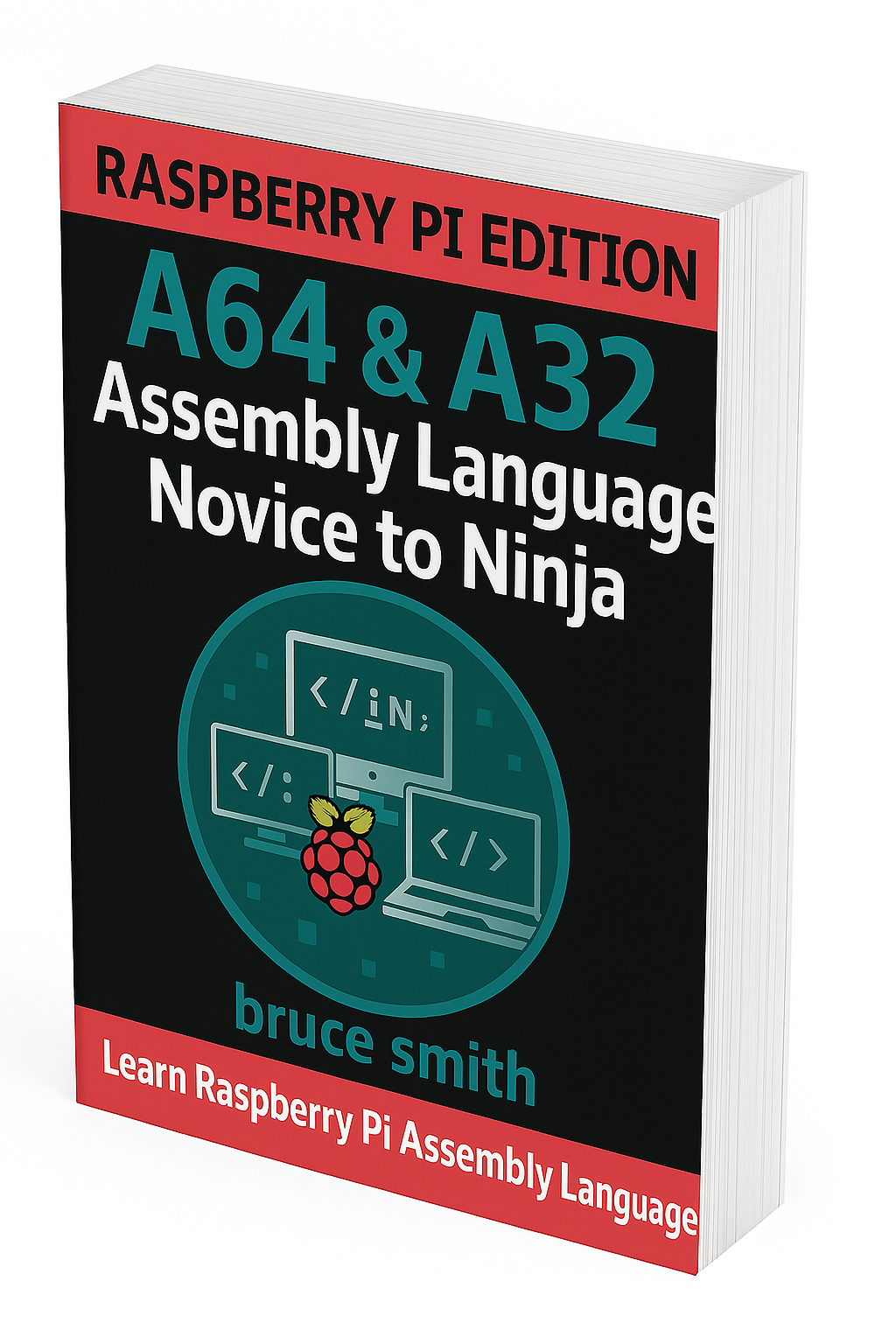

ARM Book portrait
“The book everyone has been asking me for!"”

COMING 2026: Programming ARM Assembly on Raspberry Pi: A32 & A64

The book everyone’s been asking for — a complete Novice to Ninja guide to ARM Assembly ffor the A32 and A64

At last, a book that makes the mysteries of ARM assembly not just understandable but enjoyable. You’ll dive into coding for both 32-bit and 64-bit ARM systems using your Raspberry Pi as the perfect laboratory. Each chapter introduces a new concept and builds on what came before, helping you gain confidence with the real nuts and bolts of low-level programming. You’ll work directly with registers, memory addressing, branching logic, the stack, input/output operations, and program optimisation. Nothing is left vague or assumed — every technique is explained, demonstrated, and in many cases used in practical exercises you can run yourself. For the first time, you’ll see clear, side-by-side comparisons of A32 and A64 so you can understand how the two instruction sets relate and differ. You’ll learn how to translate theory into real, working code, how to debug efficiently, and how to squeeze every ounce of performance from your programs. Each example is designed to deepen your understanding of how the ARM processor thinks and executes instructions — giving you insights that even many high-level programmers never see.Singn up to my mailing list to be notified when the book is published.

Novice to Ninja logo
Novice to Ninja

The Series

TheNovice to Ninja is all about Coding Smarter, Not Harder.

What does it really mean to go from a coding novice to a ninja? Most beginner books give you just enough to get started—then leave you stuck in the hallway, staring longingly at the rooms full of real programming power. That’s where the Novice to Ninja series is different.

This arn't just more beginner’s guide. It’s a personal journey from the very basics of coding all the way to advanced, real-world skills. Whether you’re brand new to programming or you’ve been dabbling for a while and want to go deeper, this series gives you the tools, knowledge, and confidence to truly level up.

A novice, by definition, is someone just starting out. A ninja, in today’s terms, is someone who’s sharp, skilled, and ready for anything. We’ll help you make that transformation—step by step.

Inside each book, you’ll find crystal-clear explanations, hands-on projects, and clever techniques that make complex ideas feel simple. You’ll build your skills steadily, learning not just how to code, but how to think like a developer.

Let’s face it—coding can be tough, but it doesn’t have to be hard work all the time. This series is your shortcut to writing better code with less effort, using the clever tools, shortcuts, and techniques that professionals rely on every day. We explore the software, editors, plug-ins, frameworks, and time-saving habits that turn good coders into efficient ones.

  • Set up your environment so it works with you, not against you.
  • Use smart tools that catch errors before they trip you up.
  • Automate the boring stuff so you can focus on what really matters.
  • Write cleaner, clearer code that’s easier to test and share.